Food & Culture
Religious sites and how to visit them
Active places of worship are not attractions, and the conventions are specific and generally straightforward.
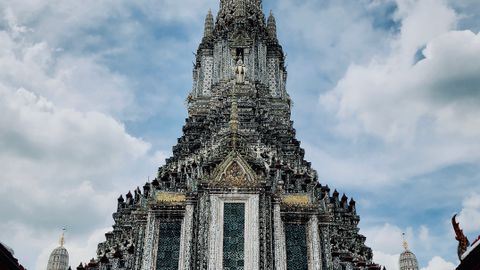
Many of the buildings visitors most want to see are working places of worship, which imposes conventions that are frequently unknown rather than deliberately ignored.
The general principles
Applicable nearly everywhere.
Dress conservatively. Shoulders and knees covered is the general minimum across traditions, with additional requirements in specific contexts.
Carrying a light scarf or wrap addresses most situations and is more practical than being refused entry.
Remove shoes where required, which is standard in mosques, most Hindu and Buddhist temples, Sikh gurdwaras and many other contexts.
Which is a practical argument for shoes that come off easily and for socks without holes.
Cover the head where required, which applies to women in mosques and to everyone in gurdwaras, among others.
Head coverings are frequently provided at the entrance.
Be quiet.
Do not interrupt worship. Where a service or prayer is occurring, either observe unobtrusively from the back or return later.
Ask about photography rather than assuming, and do not photograph people at prayer.
Do not point feet at religious images, which matters particularly in Buddhist and Hindu contexts.
Follow directions about which areas are open, since parts of many sites are restricted to adherents.
The specifics worth knowing
Mosques. Generally welcoming to visitors outside prayer times, with dress and head covering requirements and separate areas for men and women.
Friday midday prayers are the busiest and are generally not a time for visitors.
Some mosques do not admit non-Muslims at all, which varies by country and by individual mosque.
Hindu temples. Shoes removed, and in some cases leather items prohibited entirely.
Some inner sanctums are restricted to Hindus.
Photography rules vary and are frequently strict inside.
Buddhist temples. Shoes removed, shoulders and knees covered, and specific conventions about how to move around and where to sit.
Never touch or sit beside a Buddha image for a photograph, which causes genuine offence and in some countries carries legal consequences.
Churches. Conventions vary enormously between denominations and countries, with Orthodox churches generally having more requirements than Protestant ones.
Head covering for women applies in some Orthodox contexts.
Synagogues. Head covering for men, generally provided, and separate seating in Orthodox congregations.
Photography and use of devices is prohibited on the Sabbath and festivals.
Sikh gurdwaras. Head covering for everyone, shoes removed, hands washed, and no tobacco or alcohol on the premises.
Visitors are generally welcomed warmly and offered food, which it is polite to accept.
Donations
Frequently expected and rarely explained.
Many sites have donation boxes rather than admission charges, and contributing is appropriate.
Where a fee is charged, it generally supports maintenance of the building.
Where someone offers a blessing, a thread, a flower or a service, the expectation of payment should be clarified before accepting, since this is a common source of misunderstanding.
The question of whether to visit at all
Worth considering rather than assuming.
Some communities welcome visitors explicitly and regard it as valuable.
Some tolerate visitors.
And some sites are not intended for outsiders, which is signalled and should be respected.
Indigenous sacred sites in several countries have specific restrictions arising from requests by the communities concerned, and these are increasingly formalised.
Where a community has asked that a site not be climbed, entered or photographed, that request stands regardless of whether it is legally enforceable.
The reason to go
Beyond architecture.
A working place of worship shows something about a place that no museum does — what people believe, how they gather, what the rhythm of the week is.
Attending an ordinary service as an observer, where welcomed, is among the more informative things a visitor can do, and it is rarely on any itinerary.
Timing the visit
Practical guidance.
Most active sites have times when visitors are welcome and times when they are not, and these are generally published.
Visiting shortly after a service has ended is frequently the best moment: the building is open, the atmosphere is present, and nobody is disturbed.
Major festivals and holy days are generally not times for casual visiting, however interesting they appear.
The guided option
Where interpretation makes an enormous difference.
Many sites offer tours led by members of the community, which provide context that no signage does and which support the site directly.
Also by Joon Park
- Travelling in the off seasonSafety & Health
- What travel actually costs over a lifetimeMoney
- Travelling with parents and older relativesPlanning
- Insurance claims, medical care and getting treated abroadSafety & Health