Food & Culture
Souvenirs worth bringing back
Most purchases made abroad are regretted, and the categories that are not have identifiable characteristics.
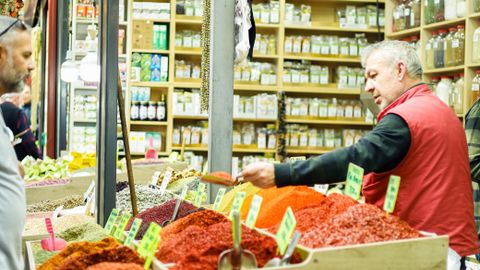
Almost everyone buys things while travelling and most of it accumulates unused. The exceptions share features worth identifying.
What survives
Things you consume, which is by a wide margin the most reliable category.
Spices, tea, coffee, preserved foods, condiments and drink.
These get used, they recall the place while being used, and they do not accumulate.
Things you use, particularly kitchen equipment specific to a cuisine.
A pan, a grinder, a pot, a knife, a coffee maker. These are generally cheap where they are made and are used for decades.
Textiles that are used — a blanket, a cloth, a rug — rather than displayed.
Books, particularly ones unavailable at home, and particularly a cookbook.
Things made by someone you met, which carry the memory of the transaction rather than of the object.
Photographs, which are free and are the thing people actually keep.
What does not survive
The pattern is consistent.
Decorative objects with no function, which look different at home.
Clothing bought in a holiday state of mind.
Anything bought because it was cheap rather than because it was wanted.
Mass-produced items sold in tourist areas, which are frequently manufactured elsewhere and are available online.
And anything bought under pressure, which is generally regretted immediately.
Buying from makers
The distinction that matters most for both quality and impact.
Buying directly from a workshop, a market stall run by the producer, or a cooperative directs the money to the person who made the item and generally produces a better object.
Buying from a shop in a tourist area frequently means a mass-produced item at a substantial markup with the maker receiving little.
The questions worth asking: who made this, where, and can I see it being made.
Genuine producers are generally pleased to answer and frequently to demonstrate.
The authenticity question
Where visitors are most often misled.
Handmade is used loosely, and mass-produced items imitating traditional crafts are widespread in tourist markets everywhere.
The indicators of genuine work: variation between pieces, evidence of hand finishing, a price that reflects the labour involved, and a maker who can explain the process.
Certification schemes exist for several crafts in several countries and vary in reliability.
And a suspiciously low price for something that would take days to make by hand is an answer in itself.
What not to buy
Where the consequences are legal as well as ethical.
Wildlife products — ivory, coral, shell, certain skins, and traditional medicines containing animal parts.
Many are prohibited under international convention and penalties for importing them are substantial.
Antiquities. Trade in archaeological material is restricted in most countries and prohibited in many, and purchasing it supports looting.
Anything genuinely ancient offered for sale to a tourist is either illegal or fake.
Plant material and seeds, which are restricted for biosecurity reasons and confiscated routinely.
Counterfeit goods, which are illegal to import in many countries and which are confiscated with penalties.
Anything you cannot establish the provenance of, particularly cultural material from indigenous communities.
The customs practicalities
Worth checking before buying rather than at the border.
Import allowances for alcohol, tobacco and total value, which vary and above which duty is payable.
Restrictions on food, particularly meat, dairy and fresh produce, which are strictly enforced in several countries.
Restrictions on plant material and wooden items, which may require treatment certification.
And export restrictions at the destination, which apply to antiquities and cultural property in many countries and which are the seller's responsibility to disclose and frequently are not.
The test worth applying
A simple one that prevents most regret.
Would you buy this at home, at this price, if it had no association with the trip?
For consumables, tools and books the answer is frequently yes.
For decorative objects it is almost always no, which is the information you needed.
Getting it home
Practical considerations.
Liquids purchased before security cannot be carried through unless sealed appropriately, which catches people buying oil, wine and preserves.
Fragile items require packing that hand luggage restrictions may not permit.
And shipping is frequently cheaper than an extra checked bag for anything heavy, with the caveat that customs duty may be payable on arrival.
Checking the allowance and the shipping cost before buying something substantial prevents an expensive surprise at the airport.
Also by Kwame Boateng
- The things worth knowing before any tripSafety & Health
- Coffee, tea and drinking cultureFood & Culture
- Getting between airports and citiesFlights & Transport
- Alcohol, substances and the legal positionSafety & Health