Food & Culture
Festivals and how to attend them
A festival can be the reason for a trip or the reason it goes wrong, and the difference is planning and conduct.
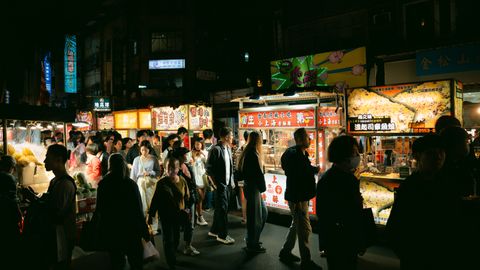
Attending a festival is among the more rewarding ways to encounter a place, and it requires more preparation than an ordinary visit.
The planning consequences
A major festival changes the practical conditions substantially.
Accommodation fills months in advance and prices rise sharply, frequently by a multiple.
Transport is heavily booked, and local services may be altered or suspended.
Restaurants require booking, and some close.
Crowds change what is possible, and popular viewing positions may require arriving hours early.
Which means the planning has to happen earlier than for an ordinary trip, and a spontaneous visit during a major festival is generally not possible.
The categories
Religious observances, which are the largest category worldwide and which require the most care regarding conduct.
Some welcome visitors explicitly; some tolerate them; and some are not intended for outsiders at all.
Civic and national celebrations, generally public and welcoming.
Seasonal and agricultural festivals, marking harvests, spring, and specific crops.
Arts festivals, which are organised for audiences and therefore straightforward.
Carnivals and street festivals, which are participatory and where the distinction between spectator and participant is deliberately blurred.
The conduct that matters
Where visitors most commonly cause offence.
Religious observances require particular attention: appropriate dress, understanding which spaces are open to non-adherents, and awareness that a ceremony is not a performance.
Photography during religious ritual is frequently unwelcome even where not prohibited.
Asking before photographing individuals, which applies everywhere and particularly where people are in ceremonial dress.
Not obstructing participants, which happens constantly at events where a procession or performance has a route.
Following local guidance about where visitors should be.
Not treating a solemn occasion as a spectacle, which is the underlying principle for all of the above.
What to research beforehand
The specific things worth knowing.
What the festival is actually for, which frequently differs from how it is marketed.
Whether visitors are welcome and in what capacity.
What the dress expectations are, which for religious sites are frequently specific and enforced.
Whether alcohol is appropriate, since several major festivals occur during periods of abstinence.
The schedule, since the main event is frequently one moment within a longer period.
And whether there is a local etiquette that would not be obvious — where to stand, whether to participate, what to bring.
The smaller ones
Worth prioritising over the famous ones.
Village and neighbourhood festivals happen constantly across most countries and are generally uncrowded, welcoming and considerably more interesting than the events that appear on international lists.
Finding them requires local information: asking at accommodation, looking at posters, checking a local events listing, or asking a tourist office what is happening in the surrounding area rather than in the city.
The answer is frequently something substantial that no guidebook mentions.
The practical arrangements
For a major event.
Book accommodation as early as possible, and check the cancellation terms.
Consider staying outside the immediate area and travelling in, which is frequently much cheaper and requires checking that transport runs.
Arrive earlier than seems necessary for anything with a fixed viewing position.
Carry water, sun protection and cash.
Agree a meeting point with anyone you are with, since phone networks are frequently overloaded at large events.
And plan the departure, since leaving a large event is frequently harder than arriving.
The alternative
Worth considering.
Visiting a place immediately before or after a major festival gives the preparation or the aftermath, considerably lower prices, and a city that is animated without being overwhelmed.
For several famous events, the days around them are more pleasant than the day itself, which is a trade-off worth weighing rather than assuming.
The participation question
Where visitors are frequently uncertain.
Some festivals are explicitly participatory and welcome anyone joining — processions, dances, communal meals.
Others have roles that belong to specific people, and joining is intrusive.
The reliable approach is to watch first, to accept an invitation if one is extended, and not to insert yourself otherwise.
Where visitors are welcomed into something, it is generally made obvious.
Afterwards
Many festivals have a quieter second phase — the clearing up, the following day, the smaller local events around the main one — which is frequently where the more interesting encounters happen.
Also by Joon Park
- Travelling in the off seasonSafety & Health
- What travel actually costs over a lifetimeMoney
- Travelling with parents and older relativesPlanning
- Insurance claims, medical care and getting treated abroadSafety & Health