Food & Culture
Eating well as a traveller
Finding good food in an unfamiliar place is a skill with a small number of reliable rules.
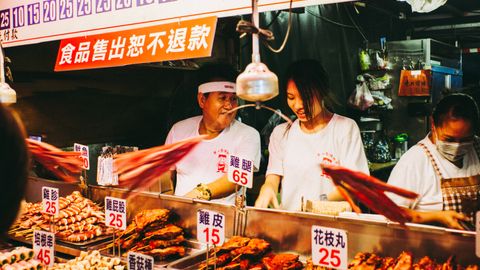
Eating badly while travelling is easy, expensive and entirely avoidable. The rules that work are consistent across countries.
The reliable signals
Where local people are eating, which is the foundation of everything else.
A place full of people who live there, at the time they normally eat, is a stronger signal than any rating.
Note that local eating times differ substantially — dinner at ten in Spain, at six in parts of northern Europe, and continuous street eating in much of Asia.
Arriving at the local hour rather than your own is most of the method.
A short menu, which indicates a kitchen doing a limited number of things.
A long menu covering several cuisines indicates a freezer.
A menu in one language, or with limited translation, which suggests the customers are local.
High turnover, particularly for street food, since ingredients do not sit.
Specialisation. Places that do one dish are generally better at it than places that do forty.
The warning signs
Someone outside inviting you in, which is a reliable negative signal in most tourist areas.
Photographs of every dish, particularly faded ones.
Menus in many languages displayed prominently outside.
A location directly on the main square of a heavily visited city, where rent is paid for by volume rather than by quality.
No prices displayed, which occasionally indicates something excellent and more often indicates the opposite.
Markets
Consistently the best food destination in most places and consistently under-used by visitors.
Produce markets show what is actually in season locally, which is the fastest way to understand a regional cuisine.
Many have prepared food stalls where traders and shoppers eat, which is generally the best inexpensive meal available.
Going early, when the market is working rather than performing for visitors, is a different experience from going at midday.
Street food
Frequently the best food in a place, and it warrants a small amount of judgement.
The practical indicators: high turnover, food cooked to order in front of you, hot food that is genuinely hot, and a queue of local customers.
Cooked and served immediately is generally safer than sitting at ambient temperature.
Peeled fruit, salads washed in unknown water and ice are the usual cautions in places where tap water is not potable.
Millions of people eat this food daily; the caution is about specific practices rather than about street food as a category.
The language
A small amount goes a long way.
Learning the names of a dozen dishes, the word for the local speciality, and how to ask what is good today changes the experience substantially.
Dietary requirements are worth learning to express precisely, and worth carrying written in the local language, since a partial translation can be dangerous for an allergy.
The things worth seeking out
Whatever the region is known for locally rather than nationally, which is frequently different from what a guidebook lists.
Breakfast, which is the meal most distinctive to a place and the one visitors most often replace with a hotel buffet.
The set lunch, which in many countries is the same kitchen's food at a fraction of the dinner price.
Bakeries and food shops, which produce a good meal for very little and which show what people actually eat.
Whatever is in season, which is the single most reliable ordering strategy anywhere.
Asking
The most effective technique and the one people are most reluctant to use.
Ask the person at your accommodation where they eat, not where they recommend — the phrasing matters, since the second question produces the answer they think visitors want.
Ask a shopkeeper, a taxi driver, or the person next to you at a counter.
Most people are pleased to be asked about food, in most places, and the answers are consistently better than any list.
General information about travel and food, not medical advice. Consult a qualified clinician about food safety and dietary concerns relevant to your own health.
Also by Kwame Boateng
- The things worth knowing before any tripSafety & Health
- Coffee, tea and drinking cultureFood & Culture
- Getting between airports and citiesFlights & Transport
- Alcohol, substances and the legal positionSafety & Health