Where to Stay
Why Hotel Rooms Look The Same Everywhere
Standardised layouts, furniture and finishes are the result of construction economics and operating requirements, not a lack of imagination, and the sameness has measurable purposes.
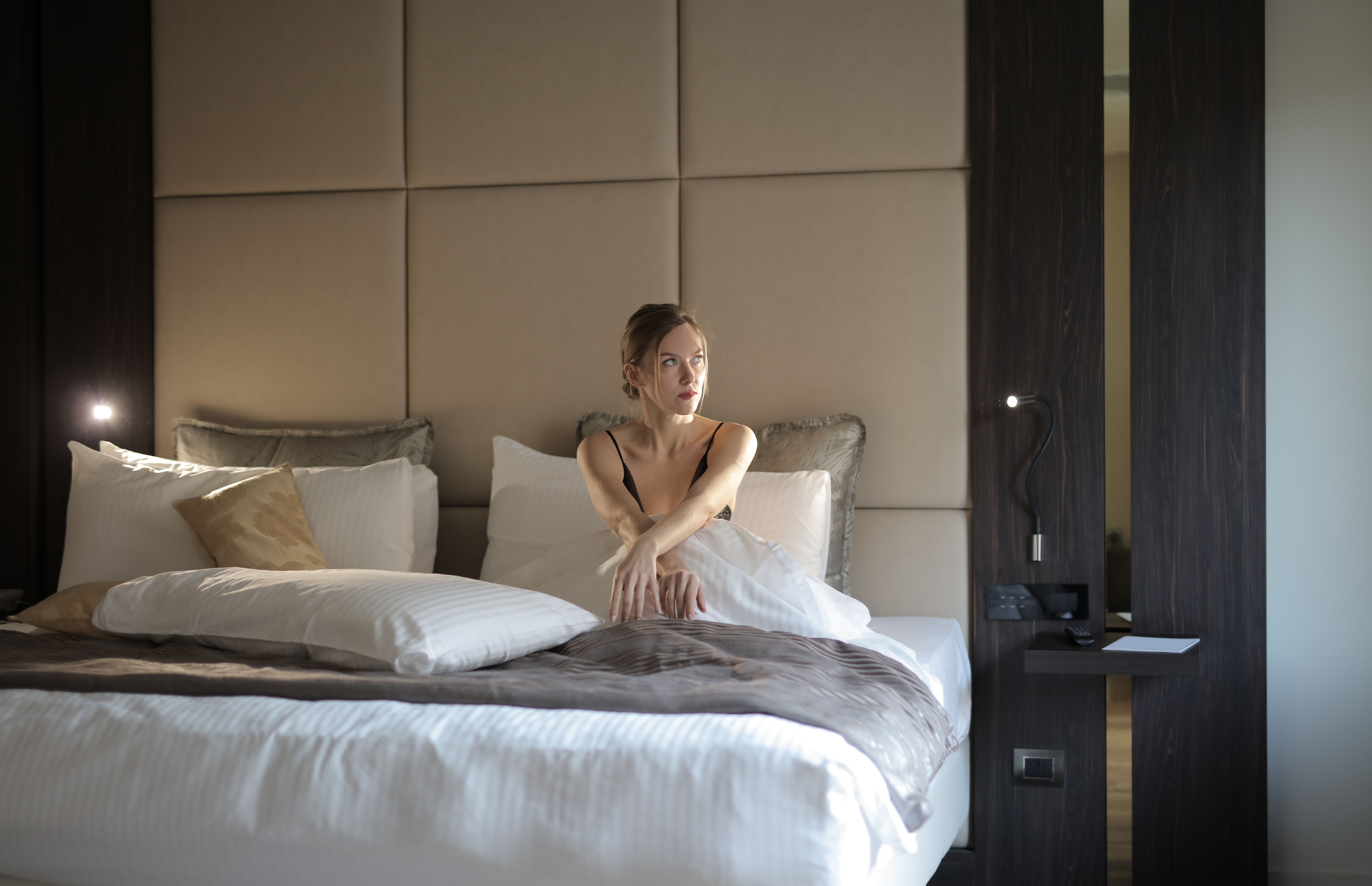
Hotel rooms across continents share a layout, a furniture arrangement and a set of materials. The convergence is driven by construction cost and daily operation rather than taste.
The bathroom fixes the plan
Plumbing is the most expensive element to install and the least flexible to move, so rooms are stacked vertically with bathrooms aligned on a single riser.
Placing the bathroom beside the entrance creates a short corridor that also acts as sound separation between the bed and the hallway.
Once that decision is made, the rest of the room has only a few workable arrangements, and every hotel arrives at broadly the same one.
Housekeeping time drives the furniture
A room must be cleaned within a target time, and every obstacle adds minutes that multiply across hundreds of rooms and every day of the year.
Furniture is therefore wall-mounted or heavy enough not to move, surfaces are wipeable, and the floor is kept clear so a cleaning route can be walked without repositioning anything.
Soft furnishings are limited for the same reason, since fabric requires deep cleaning on a schedule that hard surfaces do not.
Durability standards eliminate most materials
Hotel fittings face use that domestic equivalents never see, and replacement means taking a room out of service, which costs revenue as well as money.
Contract-grade furniture and fabrics are specified to survive that use and to meet fire regulations, and the range that satisfies both is narrow.
The result is a common palette of materials across brands and countries, because the same small set of manufacturers supplies the whole industry.
Brand standards enforce consistency deliberately
Chains sell predictability. A guest booking a familiar brand in an unfamiliar city is buying the certainty of a known room, and that certainty is the product.
Standards documents specify bed heights, socket positions, lighting levels and lobby layouts, and franchisees are audited against them.
Consistency also lowers cost, since a group can buy furniture in enormous volume and train staff on a single operating model across hundreds of properties.
Where the sameness is now breaking
Competition from apartment rentals removed the advantage of predictability for some travellers, and chains responded with sub-brands designed to look local.
Conversions of historic buildings force irregular room shapes, and hotels increasingly sell that irregularity rather than engineering it out.
The underlying operational logic has not changed, so the variation tends to be in finishes and public spaces while the room plan behind it remains recognisable.
Also by Joon Park
- Travelling in the off seasonSafety & Health
- What travel actually costs over a lifetimeMoney
- Travelling with parents and older relativesPlanning
- Insurance claims, medical care and getting treated abroadSafety & Health