Money
Where the money actually goes
How tourist spending is distributed determines whether it benefits a destination, and the differences between arrangements are large.
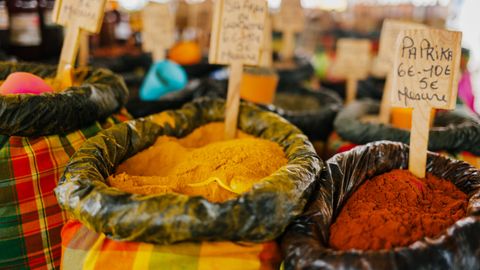
Tourism is frequently described as economically beneficial to destinations, and how much of the spending remains locally varies enormously with how it is spent.
The leakage concept
Economists studying tourism use the term leakage for the share of visitor spending that leaves the destination economy.
It occurs through several channels.
Payments to foreign-owned airlines, hotel chains, tour operators and booking platforms.
Imported goods consumed by visitors — food, drink, fuel and equipment that the destination does not produce.
Repatriated profits from foreign-owned enterprises.
Wages paid to expatriate rather than local staff.
Estimates of leakage vary widely by destination and by study, with figures for some small island economies cited as very high and figures for diversified economies much lower.
The specific figures should be treated cautiously; the mechanism is not disputed.
The arrangements that leak most
All-inclusive resorts, where accommodation, food, drink and activities are purchased in advance from a single operator, frequently foreign-owned, with imported supplies.
Guests have little reason to spend outside the property, which is the design.
Cruises, where accommodation and most meals are on board, port visits are short, and shore excursions are frequently sold by the cruise operator rather than by local providers.
Several port cities have concluded that cruise visitors generate substantially less local spending per head than overnight visitors while imposing comparable infrastructure costs.
Packages booked entirely internationally, where the flight, accommodation and transfers are purchased from one company abroad.
The arrangements that leak least
Independent travel using locally owned accommodation, local transport, local restaurants and local guides.
Homestays and small guesthouses, where the revenue goes directly to a household.
Community-based tourism arrangements, where a community collectively owns and operates the offering.
These vary in quality and in genuineness, and the well-run examples direct a very high share of spending locally.
Buying from producers rather than from intermediaries — markets, workshops, farms.
The practical version
What an individual traveller can actually do, without pretending the effect is large.
Stay in locally owned accommodation.
Eat at local restaurants rather than international chains.
Use local guides, booked locally, and pay them directly.
Use public transport and local taxis.
Buy from markets and from makers.
Book directly with providers rather than through international platforms, which take a commission and which small providers frequently prefer to avoid.
And stay longer, since a visitor staying a week spends more locally than seven visitors staying a day.
The employment question
Worth noting alongside the spending.
Tourism employment is frequently seasonal, low-paid and insecure, which is a genuine criticism of the industry as a development strategy.
The higher-paid positions are frequently held by people from outside the destination.
Which is a structural issue rather than something a visitor can address, and it is worth knowing when tourism is presented as straightforwardly beneficial.
The other side
Worth stating for balance.
For many destinations, tourism is a substantial share of employment and foreign exchange earnings, and the alternative is not a better industry but no industry.
Reduced visitor numbers during the disruption of recent years demonstrated this clearly, with severe consequences for economies dependent on it.
Which means the useful question is how tourism is structured rather than whether it should exist.
Assessing a provider
For anyone wanting to check.
Who owns it, which is frequently stated and frequently not.
Whether staff are local and how they are paid, which can reasonably be asked.
Where supplies come from.
And whether any community arrangement described is genuine or is marketing, which is harder to assess and for which independent certification schemes exist with varying credibility.
The certification schemes
A note on assessing claims.
Several international and national schemes certify tourism businesses on environmental and social criteria, with varying rigour.
The stronger ones require independent audit against published standards; the weaker ones are self-declared.
Which means the presence of a logo is a starting point rather than an answer, and checking what the scheme actually requires is worth the few minutes.
Where no certification exists, the direct questions in this article are the practical substitute.
Also by Sofia Marchetti
- Travel and mental healthSafety & Health
- Booking platforms and what they doWhere to Stay
- The trip you actually wantPlanning
- Women travelling aloneSafety & Health