Flights & Transport
Overnight travel and how to do it
Night trains, buses and ferries convert a travel day into a night, with a trade-off worth calculating.
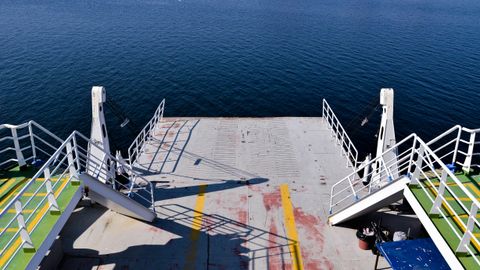
Travelling overnight saves a day and a night's accommodation, at the cost of sleep quality that varies enormously with the arrangement.
Night trains
Which have expanded in Europe after decades of decline, with several new routes and rolling stock.
The accommodation types matter more than anything else.
Seats, which are cheapest and produce poor sleep.
Couchettes, shared compartments with four or six berths, bedding provided, generally mixed unless a women-only compartment is booked.
Adequate sleep is achievable, and it depends substantially on who else is in the compartment.
Sleepers, private or shared compartments with proper beds, washing facilities and sometimes en suite.
Substantially more expensive and substantially better, and when compared against a hotel night plus a day of travel the price is frequently reasonable.
Practical points: book early, since sleeper capacity is limited and sells out; bring earplugs and an eye mask; keep valuables secured and in the berth with you; and note that trains are frequently shunted and split during the night, so confirming which carriage goes where matters.
Night buses
Cheapest and generally least comfortable.
Quality varies enormously by country, with some networks offering reclining or fully flat seats and others offering ordinary coach seating.
The specific difficulties: temperature, which is frequently either very cold from air conditioning or very warm; noise; frequent stops; and border crossings requiring everyone to disembark at unhelpful hours.
Practical measures: choose seats away from the toilet and the door, bring layers, and bring food since stops are unpredictable.
The safety consideration is real: night driving on unfamiliar roads with a tired driver is the mechanism behind a substantial share of serious incidents in some countries, and operator reputation is worth checking.
Ferries
Frequently the most pleasant overnight option and the most overlooked.
Cabins on overnight ferries are generally comparable to a modest hotel room, with restaurants and deck space.
Deck or reclining seat passage is available on many routes at very low cost, with variable comfort.
Routes operate across the Mediterranean, the Baltic, the North Sea, the Adriatic, around Japan and Indonesia, and along several coastlines.
Practical points: check seasonal schedules, since many routes reduce substantially outside summer; arrive early for vehicle loading; and note that sea conditions affect comfort considerably on some routes.
Overnight flights
The most common form of overnight travel and generally the worst for sleep.
Practical measures: choose a seat away from galleys and toilets, bring an eye mask and noise reduction, avoid alcohol, and set the watch to the destination time on boarding.
Whether to sleep depends on whether the flight corresponds to night at the destination, as discussed elsewhere on this site.
The calculation
Whether overnight travel is worth it.
Time saved: a full day, which on a short trip is significant.
Money saved: a night's accommodation, which for a sleeper compartment is frequently offset by the fare.
Cost: a night of poor sleep, which affects the following day and sometimes the one after.
Which suggests overnight travel suits journeys of a certain length — long enough to consume a day otherwise, short enough that the discomfort is bounded — and suits people who can sleep in transit.
For anyone who cannot, the arithmetic changes entirely, since a lost day of function costs more than the day saved.
The arrival problem
The most commonly overlooked consideration.
Arriving somewhere at six in the morning with a check-in time of three in the afternoon produces nine difficult hours.
The solutions: book the previous night at the destination so the room is available on arrival; arrange early check-in in advance; or identify somewhere to leave luggage and somewhere to be — a station facility, a café, a bathhouse, a gym.
Planning this before arrival rather than at six in the morning is the difference between a good start and a bad one.
What to have accessible
A short list that makes overnight travel considerably better.
Earplugs and an eye mask, which are the two highest-value items by a wide margin.
A warm layer, since night services are frequently cold.
Water and food, since services may be limited.
Valuables kept on your person rather than in a bag on a rack.
And a charged device with anything you need downloaded, since power outlets are not guaranteed.
Also by Sofia Marchetti
- Travel and mental healthSafety & Health
- Booking platforms and what they doWhere to Stay
- The trip you actually wantPlanning
- Women travelling aloneSafety & Health