Flights & Transport
Missed flights, cancellations and getting home
Disruption is common, the entitlements differ by jurisdiction, and the response in the first thirty minutes determines the outcome.
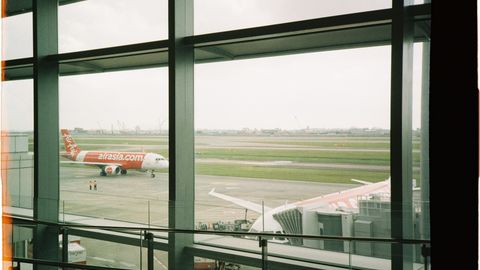
Flight disruption affects a meaningful share of journeys, and passengers who know the process consistently do better than those who wait to be told.
The first thirty minutes
Where the outcome is determined.
Act immediately, before the announcement produces a queue.
Do two things at once: join the queue and call the airline simultaneously.
Whichever responds first is the route that works, and phone lines are frequently faster than desks.
Calling the airline's number in another country is sometimes faster than the domestic one, which is a technique frequent travellers use.
Check the application, which on several airlines offers self-service rebooking before staff can process it.
Know what you want. Look up the alternative flights — same airline, partner airlines, other routings — before speaking to anyone.
A specific request is processed far faster than an open one, and agents can generally book what you name if it is available.
What you are entitled to
Varies by jurisdiction, and the differences are large.
European Union and United Kingdom regulations provide for compensation for cancellations and long delays within the airline's control, at fixed amounts depending on distance, alongside a duty of care — meals, refreshments, accommodation and transport — during waits above defined thresholds.
They apply to departures from covered airports and to arrivals on carriers based there.
Extraordinary circumstances — principally weather and air traffic control decisions — exempt the airline from compensation but not from the duty of care or from the obligation to rebook.
In the United States, rules require refunds for cancellations and significant changes, with compensation beyond refunds remaining limited compared with European provisions.
Elsewhere, provisions vary, with several countries having introduced passenger rights regimes.
Airline conditions of carriage set out what they will do beyond legal requirements, and these vary.
Rebooking
The mechanics.
Airlines are generally obliged to rebook you to your destination at the earliest opportunity, which may include partner airlines.
Whether they will book you on a competitor depends on their policy and on whether interline agreements exist.
Asking specifically about a named alternative flight is more effective than asking what is available.
Where the airline cannot rebook within a reasonable period, a refund and independent arrangements may be the better option, and the choice between refund and rebooking is generally the passenger's.
Accommodation and expenses
Where duty of care applies, the airline should provide accommodation and transport.
In practice they frequently direct passengers to arrange their own and claim.
Which means: keep every receipt, spend reasonably, and photograph the departure board showing the disruption.
Reasonable means a modest hotel and ordinary meals rather than a luxury arrangement, since claims for excessive expenses are reduced.
Making a claim
The process.
Claim directly with the airline first, in writing, citing the regulation and the flight details.
Where the airline refuses or does not respond, escalate to the national enforcement body or the relevant ombudsman scheme.
Claims management companies will pursue claims for a percentage, which is convenient and unnecessary for straightforward cases.
Time limits apply and vary by jurisdiction, generally measured in years rather than months.
Missed connections
Covered in more detail elsewhere on this site, with the central point repeated.
On a single ticket, the airline is responsible for getting you to the final destination.
On separate tickets, it is not, and the second ticket is simply lost.
Which is the most consequential thing to understand when booking connections.
Insurance and cards
Frequently overlooked sources of cover.
Travel insurance policies commonly cover delay expenses and missed departures, subject to conditions.
Several credit cards provide travel delay cover when the ticket was purchased with the card.
These operate alongside regulatory entitlements rather than instead of them.
Reducing the risk
The measures that help.
Earliest flight of the day, which has the lowest delay probability and the most alternatives if it fails.
Single tickets rather than separate ones.
Routes with frequent service, so alternatives exist.
Avoiding the last connection of the day.
And building a buffer day before anything that cannot be missed, which is the only genuine protection for a fixed commitment.
General information about travel, not legal advice. Passenger rights vary by jurisdiction and change — consult the relevant regulator for current entitlements.
Also by Joon Park
- Travelling in the off seasonSafety & Health
- What travel actually costs over a lifetimeMoney
- Travelling with parents and older relativesPlanning
- Insurance claims, medical care and getting treated abroadSafety & Health