Flights & Transport
Jet lag and long flights
The evidence on adjusting to time zones supports a few specific measures and not most of the folk remedies.
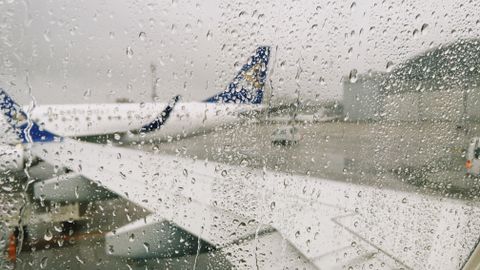
Jet lag is a genuine physiological disruption rather than simple tiredness, and the measures that help are more specific than the general advice suggests.
What is actually happening
The body's internal clock is set principally by light exposure and governs sleep, temperature, digestion and alertness on roughly a twenty-four-hour cycle.
Crossing time zones desynchronises that clock from the local day.
The clock adjusts at a limited rate — commonly cited as around an hour per day, varying between individuals — which is why several days are required after a substantial shift.
Eastward travel is generally harder than westward, because advancing the clock is more difficult than delaying it.
What the evidence supports
Light timing, which is the primary tool.
Light exposure at the right time advances or delays the clock; at the wrong time it works against the adjustment.
The general principle after eastward travel is to seek morning light at the destination and avoid light in the late evening.
After westward travel, the reverse: seek evening light and avoid early morning light.
The timing depends on the number of zones crossed and is worth working out for a specific journey, since getting it backwards actively delays adjustment.
Melatonin, which has reasonable evidence for reducing jet lag when taken at the appropriate time relative to the destination's night.
Timing matters more than dose, and the evidence generally supports low doses.
Availability and regulation differ by country, and it is worth discussing with a clinician particularly for anyone on other medication.
Adjusting the schedule before departure, shifting sleep by an hour or so per day toward the destination time, which reduces the shift required on arrival.
Adopting local time immediately on arrival, including meals, which are a secondary cue for the body clock.
What is less supported
Worth stating.
Elaborate fasting protocols, which have limited evidence and are unpleasant.
Specific supplements marketed for jet lag, most of which have little support.
And the general advice to simply stay awake until local bedtime regardless of how many zones were crossed, which is reasonable for shorter shifts and impractical for large ones.
Alcohol and caffeine
Both worth managing deliberately.
Alcohol impairs sleep quality and increases dehydration, and its effects are more pronounced at cabin altitude.
Caffeine is useful for maintaining alertness at the right time and counterproductive within several hours of intended sleep, with its half-life meaning an afternoon coffee affects the night.
The flight itself
Practical measures.
Hydration, since cabin humidity is very low.
Moving periodically, both for comfort and because prolonged immobility on long flights is associated with increased clotting risk.
Compression stockings are recommended for anyone at elevated risk, and the risk factors are worth discussing with a clinician for anyone with relevant history.
Sleeping on the flight if it corresponds to night at the destination, and staying awake if it does not.
Eye mask, earplugs or noise-cancelling headphones, which make sleeping in a seat substantially more achievable.
And avoiding the temptation to watch films for twelve hours, which is what most people do and which guarantees arriving exhausted.
The arrival day
Where the difference is made.
Plan nothing demanding.
Get outside in daylight if the light timing is appropriate.
Eat at local meal times.
Take a short nap if necessary — twenty to thirty minutes, not three hours, and not late in the day.
And go to bed at a local bedtime even if not tired, since the routine matters.
The trip design implication
Worth building into planning.
A short trip across many time zones means spending most of it adjusting, which is an argument either for a longer trip or for a closer destination.
Scheduling anything important — a meeting, a demanding activity — for the first day after a long eastward flight is generally a mistake.
And on the return, allowing a day at home before returning to work is worth more than it costs.
General information about travel health, not medical advice. Consult a qualified clinician about melatonin, sleep medication and clotting risk in your own circumstances.
Also by Kwame Boateng
- The things worth knowing before any tripSafety & Health
- Coffee, tea and drinking cultureFood & Culture
- Getting between airports and citiesFlights & Transport
- Alcohol, substances and the legal positionSafety & Health