Flights & Transport
Car hire and driving abroad
Where a car transforms a trip, where it is a liability, and the charges that appear afterwards.
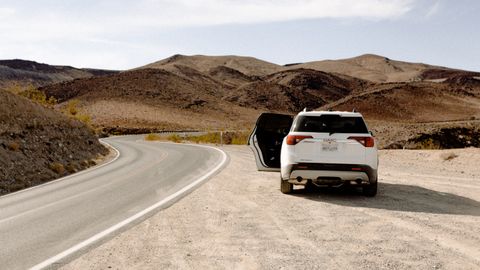
Hiring a car opens up parts of a country that public transport does not reach, and it comes with a set of costs and risks that the headline rate does not include.
When a car makes sense
Rural areas, national parks, coastal routes, and anywhere the sights are dispersed.
Travelling with children or with substantial luggage.
Regions where public transport is infrequent or does not exist.
When it does not
Cities, almost always.
Parking is expensive or unavailable, many historic centres are closed to non-resident vehicles with automatic enforcement, and public transport is generally better.
The common approach that works: public transport between cities, a car hired for the rural portion and returned before the next city.
The charges beyond the rate
Where the actual cost sits.
Insurance. The included cover generally carries a very large excess, and the counter will offer to reduce it at a daily rate that frequently exceeds the rental itself.
Alternatives: standalone excess insurance bought separately, which is substantially cheaper, or cover provided by a credit card, which requires checking the terms and generally requires declining the counter product and paying with that card.
The credit card route requires care, since some policies exclude certain countries and vehicle types.
Additional driver fees, charged per day.
Young or senior driver surcharges, which apply below and above defined ages.
One-way fees, which can be very large for cross-border or long-distance drop-offs.
Fuel policy. Full-to-full is the fairest; pre-purchase arrangements generally charge above market rate and refund nothing for unused fuel.
Cross-border restrictions, which some companies prohibit and others charge for, and which void insurance if breached.
Tolls, vignettes and congestion charges, which vary by country and which the company will pass on with an administration fee.
The documentation
An international driving permit is required in a number of countries and is a translation of your licence rather than a licence itself.
It must generally be obtained before travelling, since it cannot be issued abroad.
Some countries accept a home licence alone, some require the permit alongside it, and requirements change.
A credit card in the main driver's name is generally required for the deposit, and debit cards are frequently refused.
At the counter and at the car
Practical protection.
Photograph or video the vehicle thoroughly before leaving, including the roof, the wheels, the windscreen and the interior.
Check that existing damage is recorded on the form.
Check the fuel level against what the form states.
Note the fuel type required, since misfuelling is expensive and is not covered.
Check that the spare, the warning triangle and the high-visibility jacket are present, since several countries require them and fine for their absence.
And photograph the vehicle again on return, with the fuel gauge and the odometer.
The driving itself
Points that catch people out.
Which side of the road, obviously, and the specific difficulties are junctions, roundabouts and the first few minutes after any stop.
Local rules that differ: priority conventions, right turns on red, motorway lane discipline, mandatory equipment, and alcohol limits which are lower in many countries than travellers expect and are zero in some.
Speed enforcement is generally automatic, and fines reach the rental company and then the driver months later with a fee attached.
Restricted traffic zones in Italian and several other historic city centres are enforced by camera and are among the most common expensive surprises.
The safety point
Covered elsewhere on this site and worth repeating here.
Road traffic incidents are the leading cause of preventable death among travellers.
Road conditions, enforcement and driving culture vary enormously, and the practical implications are: avoid driving at night in unfamiliar countries, be cautious about long distances on the first day, use seatbelts including in the rear, and be sceptical about hiring a motorcycle or scooter without relevant experience and a valid licence for that class.
General information about travel, not legal or insurance advice. Requirements vary by country — check current rules and your own insurance before travelling.
Also by Kwame Boateng
- The things worth knowing before any tripSafety & Health
- Coffee, tea and drinking cultureFood & Culture
- Getting between airports and citiesFlights & Transport
- Alcohol, substances and the legal positionSafety & Health