Planning
Planning a trip backwards
Most people plan from the destination outward, which produces itineraries that do not survive the first day.
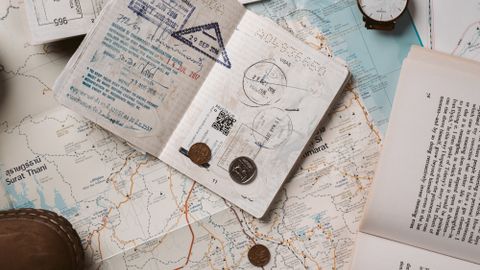
The usual planning sequence — choose a destination, list attractions, fit them into the available days — reliably produces trips that are more exhausting than they should be.
The problem with the standard method
A list of attractions has no natural length, so it expands to fill the available time and then some.
Travel time between items is systematically underestimated, particularly in cities where the distance on a map bears little relation to the time on the ground.
And nothing in the method accounts for the fact that people become tired, that things take longer than expected, and that the best parts of a trip are generally unplanned.
Planning backwards
The alternative starts from what you want the trip to feel like rather than from what you want to see.
Ask what the good days would look like. Slow mornings and long dinners? Early starts and long walks? A base with day trips, or continuous movement?
Then ask how many nights in each place that implies.
The general rule that experienced travellers converge on: fewer places, more nights in each.
Three nights is generally the minimum for a place to be worth unpacking in, because the arrival day and the departure day are largely consumed by logistics.
The arithmetic nobody does
Worth doing explicitly.
A day with a morning departure and an afternoon arrival elsewhere is not a day in either place.
A two-week trip with five destinations contains, realistically, about six usable days.
The same trip with two destinations contains about eleven.
Which is the single most common planning error, and it is arithmetic rather than preference.
The one-thing-a-day rule
A discipline that works well.
Plan one substantial thing per day — a museum, a hike, a neighbourhood, a market, a trip out of town.
Everything else is optional and happens if there is appetite.
This produces days that finish without exhaustion and leaves room for the unplanned encounters that people remember.
It also means that when something goes wrong — a closure, weather, illness — the day is not ruined, because there was only one commitment.
What to book in advance and what not to
Book: flights, accommodation in peak season, anything with genuinely limited capacity and timed entry, and any long-distance rail with limited seats.
Also book anything that would be the reason for the trip, since discovering it is sold out on arrival is a specific and avoidable disappointment.
Do not book: restaurants for every night, day-by-day activity schedules, or internal transport that could be arranged locally.
Over-booking removes the ability to respond to weather, to advice from people you meet, and to how you actually feel.
Building in a rest day
Consistently recommended by people who travel a lot and consistently omitted by people planning a trip.
One day in a week with nothing scheduled — a lie-in, a local walk, a long lunch, laundry.
The effect on the rest of the trip is substantial, and the day itself is frequently reported afterwards as among the best.
The research that is worth doing
Distinct from the itinerary.
Opening days and hours, which vary by country and catch people out — many European museums close on Mondays, and much of southern Europe closes for several hours in the afternoon.
Public holidays at the destination, which can close everything or produce something worth planning around.
Whether anything major is scheduled during your dates, which affects both prices and availability.
Local transport basics: how to pay, whether a card works, and how to get from the airport.
And the two or three things that are genuinely worth reserving, which is usually a short list.
The written version
What is worth having on paper or offline.
Accommodation addresses in the local language, which matters for taxi drivers.
Booking references and confirmations.
The route from the airport to the first night's accommodation.
Emergency numbers and the location of your country's nearest consulate.
Everything else can be worked out on the ground, which is generally more interesting anyway.
Also by Sofia Marchetti
- Travel and mental healthSafety & Health
- Booking platforms and what they doWhere to Stay
- The trip you actually wantPlanning
- Women travelling aloneSafety & Health