Money
Budgeting a long trip
Extended travel has different economics from a holiday, and the daily rate falls substantially with the right approach.
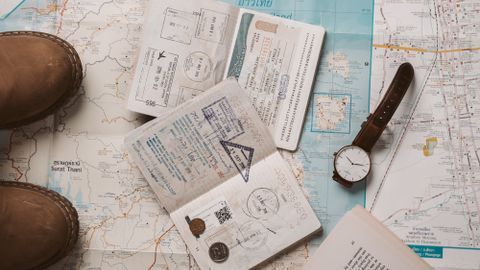
A trip of several months costs far less per day than a two-week holiday, provided the approach changes accordingly.
Why the daily cost falls
Several mechanisms.
The fixed cost of getting there is amortised over more days.
Slower movement. Transport between places is a substantial cost, and moving less frequently reduces it.
Weekly and monthly accommodation rates, which are substantially discounted from nightly ones.
Self-catering, which becomes practical with a kitchen and which changes the food budget entirely.
Local knowledge, which accumulates and which reduces the cost of everything.
Reduced sightseeing intensity, since a long trip does not require seeing everything in every place.
Travellers who move slowly report daily costs a fraction of the holiday equivalent, and the difference is mostly these six things.
The budget structure
What to build.
Fixed pre-departure costs: flights, insurance, vaccinations, visas, equipment.
A daily rate covering accommodation, food and local transport, estimated for each region since these vary enormously.
Transport between places, estimated per journey.
Activities, budgeted as a total rather than daily, since they cluster.
Ongoing costs at home, which people frequently forget — insurance, subscriptions, storage, loan payments, and anything that continues while away.
A contingency, which for a long trip should be substantial: a flight home, a medical event, an unexpected obligation.
The regional variation
The largest single factor in a long trip's cost.
Daily costs differ by a factor of several between regions, which means the itinerary determines the budget more than the behaviour does.
A trip mixing expensive and inexpensive regions can be planned so that the cheaper portions subsidise the costlier ones, which is how many long trips are structured.
Worth researching actual costs rather than using general country rankings, since the difference between a capital and a rural area within one country is frequently larger than the difference between countries.
Working while travelling
Which changes the arithmetic entirely and has complications.
Remote work for an employer at home, which requires reliable connectivity, time zone management and attention to visa and tax rules discussed elsewhere on this site.
Work exchanges providing accommodation and food, which reduce the daily rate substantially.
Seasonal work at the destination, which generally requires a permit.
Teaching, which in some countries is straightforward and in others requires qualifications and sponsorship.
The legal position varies enormously and working without authorisation carries real consequences including deportation and future entry bans.
Managing money on a long trip
Practical arrangements.
A card with no foreign transaction fees, and a second on a different network held separately.
An account accessible online, with someone at home able to assist if necessary.
Awareness of any inactivity or address rules that might affect accounts.
Keeping some funds in an account not carried, so that a total loss of cards is recoverable.
And a plan for how money reaches you if everything is lost, which is a conversation worth having before departing.
The pattern of spending
An observation from long-term travellers.
The first weeks are always more expensive than the average, because everything is unfamiliar and the temptation to do everything is strongest.
Spending generally settles substantially after the first month, as routines form and novelty declines.
Which means budgeting on the basis of the first fortnight overstates the total considerably.
Coming back
The item most often omitted.
Returning requires money — a flight, a deposit, a period without income while finding work, and the cost of re-establishing a life.
Long trips that end with no reserve produce a difficult period afterwards that colours the whole experience.
Setting aside a return fund at the outset, and treating it as unavailable, is the standard advice from people who have done this and is frequently ignored.
Reviewing as you go
The practice that keeps a long trip solvent.
A monthly review of actual spending against the plan, rather than discovering the position at the end.
Where spending is running ahead, the available adjustments are slower movement, cheaper accommodation, more self-catering and fewer paid activities — all of which are easier to apply gradually than abruptly.
Travellers who review monthly generally complete the trip they planned; those who do not generally end it early.
General information about travel, not financial or legal advice. Visa and tax rules vary — consult qualified professionals about working abroad.
Also by Kwame Boateng
- The things worth knowing before any tripSafety & Health
- Coffee, tea and drinking cultureFood & Culture
- Getting between airports and citiesFlights & Transport
- Alcohol, substances and the legal positionSafety & Health


