Safety & Health
Altitude, heat and cold
Environmental conditions cause more traveller problems than exotic disease, and they are the most preventable.
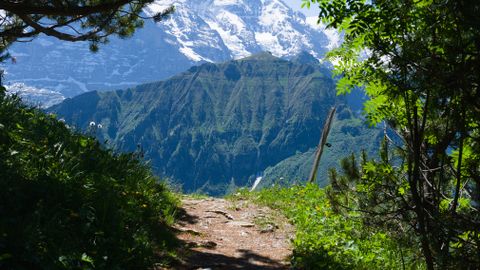
Travellers prepare for unfamiliar diseases and are caught out by temperature and altitude, which affect far more people.
Altitude
Effects begin to appear above roughly two and a half thousand metres, and they are unpredictable between individuals — fitness and previous experience are poor predictors.
Acute mountain sickness is the common form: headache, nausea, fatigue, poor sleep and loss of appetite.
It is generally self-limiting if no further ascent occurs.
The serious forms, affecting the lungs and the brain, are much less common and are medical emergencies.
Warning signs include breathlessness at rest, confusion, loss of coordination and a cough producing frothy sputum.
The definitive treatment for both is descent, immediately.
Prevention. Ascend gradually, with commonly cited guidance suggesting limits on the increase in sleeping altitude per day above a threshold, and a rest day at intervals.
Avoid alcohol in the first days. Stay hydrated. Do not ascend further if symptomatic.
Medication for prevention and treatment exists and is a matter for a clinician, since it has contraindications.
The practical point that catches people: several major cities and popular destinations are at altitudes where this applies, and travellers arriving by air ascend faster than they would on foot.
Heat
The environmental condition that causes most travel deaths after road incidents.
Heat exhaustion presents with heavy sweating, weakness, nausea, headache and a rapid pulse. It is managed by moving to shade, cooling and rehydrating.
Heatstroke is a medical emergency, characterised by a very high body temperature, confusion, and sometimes the absence of sweating.
It requires immediate cooling and emergency medical attention.
Prevention. Avoid strenuous activity during the hottest hours, which in many destinations means restructuring the day around a midday break as local people do.
Drink more than thirst suggests, and include electrolytes where sweating is heavy.
Wear loose, light-coloured, covering clothing, which is more effective than exposure.
Use shade and, where available, air conditioning during peak heat.
And allow days to acclimatise, since the body adapts measurably over one to two weeks.
Humidity matters enormously, since it prevents evaporative cooling, which is why the same temperature is far more dangerous in humid conditions.
Sun
Related and separate.
Ultraviolet exposure is higher at altitude, near water and snow, and closer to the equator.
Which means people are burned in conditions they do not associate with risk — a cool day at altitude produces severe burning.
Sunscreen applied adequately and reapplied, a hat, and covering clothing are the measures, and clothing is more reliable than sunscreen.
Eye protection matters at altitude and on snow and water, where reflected ultraviolet can cause corneal damage.
Cold
Less common among travellers and more dangerous when it occurs.
Hypothermia can develop at temperatures well above freezing where a person is wet, exposed to wind and inadequately dressed.
Signs progress from shivering and clumsiness to confusion and, in severe cases, to a paradoxical sensation of warmth.
The measures are layering, staying dry, wind protection, and consuming food and warm drinks.
Frostbite affects extremities and requires protection of hands, feet, ears and nose in cold conditions, particularly with wind.
Wind chill substantially increases the effective cold, which is why forecasts giving both figures matter.
The general principle
Local people have adapted their day to the local conditions, and following that adaptation is the most reliable protection.
Where everyone rests between noon and four, that is not laziness. Where everyone covers up in the sun, that is not modesty alone. Where everyone eats and drinks at particular times in the cold, that is functional.
Visitors who maintain their home schedule in a very different climate account for a disproportionate share of the problems.
Acclimatisation as a plan
Worth building into an itinerary rather than hoping.
For altitude, that means a night at an intermediate elevation rather than ascending directly, and a rest day before any demanding activity.
For heat, it means a lighter first few days and a restructured schedule.
The body adapts measurably to both over roughly one to two weeks, which means the first days are the most vulnerable and should be planned as such.
General information about travel health, not medical advice. Consult a qualified clinician about altitude medication and about conditions affecting your own tolerance, and seek emergency care for severe symptoms.
Also by Kwame Boateng
- The things worth knowing before any tripSafety & Health
- Coffee, tea and drinking cultureFood & Culture
- Getting between airports and citiesFlights & Transport
- Alcohol, substances and the legal positionSafety & Health